THE SUFI POET OF THE PASHTUNS۰۰
RAHMAN BABA
THE ROOTS & THE RISE
BORN OF THE MOHMAND
Born Abd al-Rahman in the village of Bahadur Kalay to a family of simple landowners, he was a son of the powerful Mohmand tribe. He was immersed in the harsh beauty and strict codes of the Pashtun heartland, a contested frontier between the declining Mughal Empire and the Persian Safavids. This world of conflict and honor would not forge him into a warrior, but into a keen observer of the human soul.
VERSE ITHE GARDENFROM THE DĪWĀN
کر د ګلو کړه چې سیمه دې ګلزار شي
Kar da gulo kra che sima de gulzar shi
Sow flowers, and your land becomes a garden.
اغزي مه کره په پښو کې به دې خار شي
Aghzi ma kra pa pkho ke ba de khar shi
Sow no thorns: they will pierce your own feet.
We are all one body. Whoever tortures another, wounds himself.
A SUFI WHO WROTE FOR HIS OWN PEOPLE.
He lived at Bahadur Kalay, on the edge of Peshawar, where the plain meets the Khyber hills. Persian was the language of the Mughal court; he wrote in Pashto, the tongue of the villages, and Pashtuns on both sides of today’s border still read him as their own.
HEARTLAND OF INFLUENCE
VERSE IIMENDING HEARTSFROM THE DĪWĀN
که مشکل دی خو د زړونو رغول دی
Ka mushkil de kho da zrro-no raghawul de
If anything is hard, it is the mending of hearts.
سهل کار دی سود و زیان د دی دنیا
Sahl kar de sud o ziyan da de dunya
The gains and losses of this world are easy work.
EXPLORE THE PILLARS
Pashtunwali is not a law written on paper, but a covenant etched onto the heart. Pashtunwali is the unwritten, ancestral code of the Pashtun people: a living tradition that governs honor, dictates justice, and demands sanctuary. It is the invisible architecture of a society, a moral compass forged in the mountains and deserts, and the timeless measure of a person's worth.
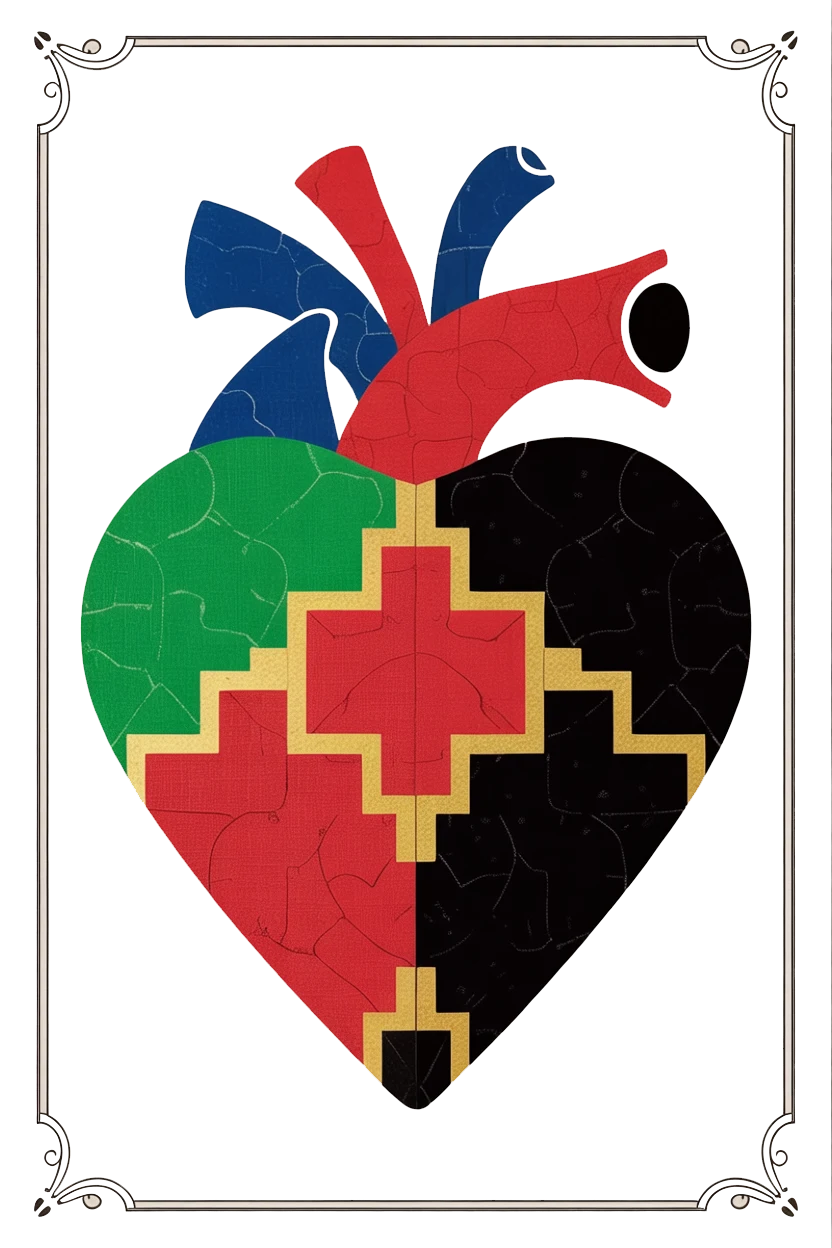
ISHQ عشق Love of the divine, found in every heart. For Rahman Baba, ishq was the road to God: to love people is to love their Maker.MELMASTIA مېلمستيا Every guest is sacred. A Pashtun shelters and feeds whoever comes to the door, friend or stranger, and asks nothing back.SABAT ثبات Loyalty that does not bend. Sabat is standing by your word, your people and your faith through every storm.NANAWATAI ننواتې Whoever comes to the door asking for protection is given it, even an enemy. The host shields the one who asked with his own life.BADAL بدل Justice in a land without courts: a wrong must be answered. Badal is a debt of honour, settled by redress, or by forgiveness, which is harder.TORA توره Courage of the body and of the heart: to stand for your people, your land and what is right, whatever it costs.NANG ننګ The sum of a life’s conduct. Nang is kept by keeping the code; once lost, it is the hardest thing in the world to win back.HEWAD هېواد Love of the homeland: the duty to guard its soil, its people and its freedom, and to hand them on whole.JIRGA جرګه The council of elders, who sit in a circle as equals and settle disputes by talking until they agree. Its word binds all.IMANDARI ايمانداري Faith and honesty as one: to be true in word and deed, before God and before people.NAMUS ناموس The dignity of women, which a Pashtun guards above his own life, and whose honour is the honour of the whole family.PAT پت Respect given and earned: to elders, to guests, to neighbours; the dignity every person is owed and every person must keep.
THE TWELVE PILLARS
Every card opens its pillar. Pashtunwali is lived, not written: twelve words a Pashtun carries from the cradle.
THE ECHOES OF LEGACY
His life was one of quiet devotion, yet its impact thunders through the centuries. Rahman Baba left behind not an empire of land, but an eternal kingdom of the soul, built upon foundations that continue to shape the Pashtun world today.
More than any king or conqueror, Rahman Baba gave the Pashto language its soul. He proved that the tongue of the mountains and the marketplace could also be the language of profound philosophy and divine love. He is not just a poet; he is the standard by which Pashto literature is measured, remembered as the 'Nightingale of Peshawar'.
VERSE IIIONE TURNFROM THE DĪWĀN
دوباره دی راتله نشته په دنیا
Dobara de ratla nishta pa dunya
There is no coming back into this world.
نن د وار دی که دروغ کړې که رښتیا
Nan de war de ka darogh kre ka rikhtya
Today is your turn: speak a lie, or the truth.
THE SAGA CONTINUES
WHY THIS EXISTSPashtun history is mostly told from the outside, by empires, armies and borders. This piece tells it from within, in the words of its own poet: a people remembered not for the wars fought over them, but for the code they keep and the verses they still recite. Rahman Baba is the first chapter. Ahmad Shah Durrani and Mirwais Hotak, who built a nation and set it free, stay locked: the saga is left for the telling. A concept by EXE.EYES LABS.
AHMAD SHAH DURRANI
(دُرِّ دُرَّان)
MIRWAIS HOTAK
(ميرويس بابا)
DISCOVER THE CODE
WHAT THIS LAB EXPLORED
A flat illustration brought to life without redrawing it. Rahman Baba is rigged on his own portrait: he breathes, blinks, follows you with his eyes and strokes his beard, drawn in WebGL. The tree, the map and the emblems are traced from the art into shapes that move region by region, and the twelve pillars of Pashtunwali turn into one another as you scroll.
CREDITS & SOURCES
- Concept, design, code and motion Exe.Eyes Labs, in the Visual Editor (SYSTEM.EXE) and Motion Studio.
- Illustration The Exe.Eyes Pashtunistan series.
- Music An ambient rubab, drone and ney piece made for this Lab.
- Verses Rahman Baba, from his Dīwān. Pashto as published by Pashtosphere; transliterations and English renderings by Exe.Eyes Labs.
- “We are all one body” A widely quoted English rendering of his lines.
- Dates c. 1632–1706, as most accounts give them; some give 1653–1711.
- Map geoBoundaries (Runfola et al., 2020), CC BY 4.0.
- Type Persian by Lettercorner Studio; Sarabun, Amiri and Noto Naskh Arabic (SIL Open Font License).
RAHMAN BABA
THE ROOTS & THE RISE
BORN OF THE MOHMAND
Born Abd al-Rahman in the village of Bahadur Kalay to a family of simple landowners, he was a son of the powerful Mohmand tribe. He was immersed in the harsh beauty and strict codes of the Pashtun heartland, a contested frontier between the declining Mughal Empire and the Persian Safavids. This world of conflict and honor would not forge him into a warrior, but into a keen observer of the human soul.
TAP BORN OR TRIBE
VERSE ITHE GARDENFROM THE DĪWĀN
کر د ګلو کړه چې سیمه دې ګلزار شي
Kar da gulo kra che sima de gulzar shi
Sow flowers, and your land becomes a garden.
اغزي مه کره په پښو کې به دې خار شي
Aghzi ma kra pa pkho ke ba de khar shi
Sow no thorns: they will pierce your own feet.
We are all one body. Whoever tortures another, wounds himself.
A SUFI WHO WROTE FOR HIS OWN PEOPLE.
He lived at Bahadur Kalay, on the edge of Peshawar, where the plain meets the Khyber hills. Persian was the language of the Mughal court; he wrote in Pashto, the tongue of the villages, and Pashtuns on both sides of today’s border still read him as their own.
HEARTLAND OF INFLUENCE
VERSE IIMENDING HEARTSFROM THE DĪWĀN
که مشکل دی خو د زړونو رغول دی
Ka mushkil de kho da zrro-no raghawul de
If anything is hard, it is the mending of hearts.
سهل کار دی سود و زیان د دی دنیا
Sahl kar de sud o ziyan da de dunya
The gains and losses of this world are easy work.
TAP TO FLIP
EXPLORE THE PILLARS
Pashtunwali is not a law written on paper, but a covenant etched onto the heart. Pashtunwali is the unwritten, ancestral code of the Pashtun people: a living tradition that governs honor, dictates justice, and demands sanctuary. It is the invisible architecture of a society, a moral compass forged in the mountains and deserts, and the timeless measure of a person's worth.
THE ECHOES OF LEGACY
His life was one of quiet devotion, yet its impact thunders through the centuries. Rahman Baba left behind not an empire of land, but an eternal kingdom of the soul, built upon foundations that continue to shape the Pashtun world today.
More than any king or conqueror, Rahman Baba gave the Pashto language its soul. He proved that the tongue of the mountains and the marketplace could also be the language of profound philosophy and divine love. He is not just a poet; he is the standard by which Pashto literature is measured, remembered as the 'Nightingale of Peshawar'.
VERSE IIIONE TURNFROM THE DĪWĀN
دوباره دی راتله نشته په دنیا
Dobara de ratla nishta pa dunya
There is no coming back into this world.
نن د وار دی که دروغ کړې که رښتیا
Nan de war de ka darogh kre ka rikhtya
Today is your turn: speak a lie, or the truth.
THE SAGA CONTINUES
TAP A PORTRAIT TO WAKE IT
WHY THIS EXISTSPashtun history is mostly told from the outside, by empires, armies and borders. This piece tells it from within, in the words of its own poet: a people remembered not for the wars fought over them, but for the code they keep and the verses they still recite. Rahman Baba is the first chapter. Ahmad Shah Durrani and Mirwais Hotak, who built a nation and set it free, stay locked: the saga is left for the telling. A concept by EXE.EYES LABS.
WHAT THIS LAB EXPLORED
A flat illustration brought to life without redrawing it. Rahman Baba is rigged on his own portrait: he breathes, blinks, follows you with his eyes and strokes his beard, drawn in WebGL. The tree, the map and the emblems are traced from the art into shapes that move region by region, and the twelve pillars of Pashtunwali turn into one another as you scroll.
CREDITS & SOURCES
- Concept, design, code and motion Exe.Eyes Labs, in the Visual Editor (SYSTEM.EXE) and Motion Studio.
- Illustration The Exe.Eyes Pashtunistan series.
- Music An ambient rubab, drone and ney piece made for this Lab.
- Verses Rahman Baba, from his Dīwān. Pashto as published by Pashtosphere; transliterations and English renderings by Exe.Eyes Labs.
- “We are all one body” A widely quoted English rendering of his lines.
- Dates c. 1632–1706, as most accounts give them; some give 1653–1711.
- Map geoBoundaries (Runfola et al., 2020), CC BY 4.0.
- Type Persian by Lettercorner Studio; Sarabun, Amiri and Noto Naskh Arabic (SIL Open Font License).
01 / 12
ISHQ
عشق
(DIVINE LOVE)
LIVE LAYER Rahman Baba’s rig · the living portraits · MOHMAND, PASHTUNWALI and the pillars in Motion Studio · the traced art · the verses · sound · the menu and the pillar view